
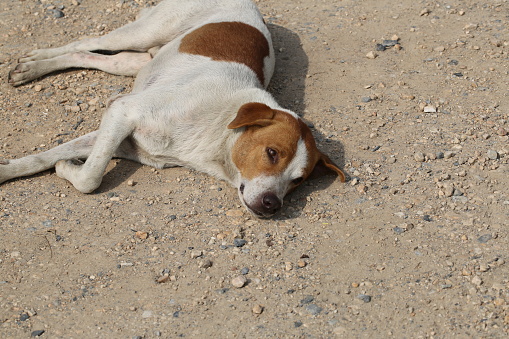
OIPA International has formally addressed the competent Jordanian authorities regarding the situation of a substantial number of free-roaming dogs currently present in remote desert areas around Safawi, in Mafraq Governorate.
Over recent weeks, OIPA has received and cross-checked audiovisual material, testimonies and information from multiple local sources and animal-welfare organizations active in Jordan.
The documentation available to OIPA indicates that a significant, although difficult-to-quantify, number of dogs are living across a vast desert area where access to water, food and routine veterinary assistance is extremely limited.
Particular concern has been raised by reports suggesting that free-roaming dogs may have been removed from urban and residential areas and transported to remote locations.
OIPA has therefore asked the Jordanian authorities to clarify whether such relocations form part of any officially authorised dog-population management policy, which authorities are responsible for them and under which legal, veterinary and animal-welfare framework they are carried out.
Another major concern relates to access to water. According to information received by OIPA, attempts had been made to establish a more stable water supply for the dogs in Safawi, but the installation was reportedly required to be removed. OIPA has requested official clarification on the circumstances surrounding this decision and has urged the authorities to facilitate safe access to drinking water for the animals currently present in the area.
Humane and sustainable solutions are needed
OIPA fully recognises the complexity of managing free-roaming dog populations and the need to protect communities from rabies, zoonotic diseases and other public-safety concerns.
However, moving animals to remote areas where their basic needs cannot be guaranteed risks exposing them to dehydration, starvation, disease and preventable suffering, while failing to address the causes of the problem.
For this reason, OIPA is calling for a One Health approach, combining public health, animal health and environmental considerations.
The organization is encouraging the expansion of humane and sustainable measures including rabies vaccination, sterilisation, veterinary care, epidemiological surveillance, responsible ownership, prevention of abandonment and cooperation with local communities and animal-welfare organizations.
Trap-Neuter-Vaccinate-Return programmes are already being implemented by animal-welfare organizations in parts of Jordan, despite limited resources, demonstrating the importance of investing in preventive and long-term population-management strategies.
OIPA has asked the competent authorities to review the reported relocations, ensure that dogs are not transferred to areas where their basic welfare needs cannot be met, guarantee reliable access to water and emergency assistance, and strengthen vaccination, sterilisation and veterinary programmes.
OIPA International remains available for constructive dialogue with Jordanian authorities and relevant stakeholders to support humane, evidence-based and sustainable solutions capable of protecting public health, community safety and animal welfare together.